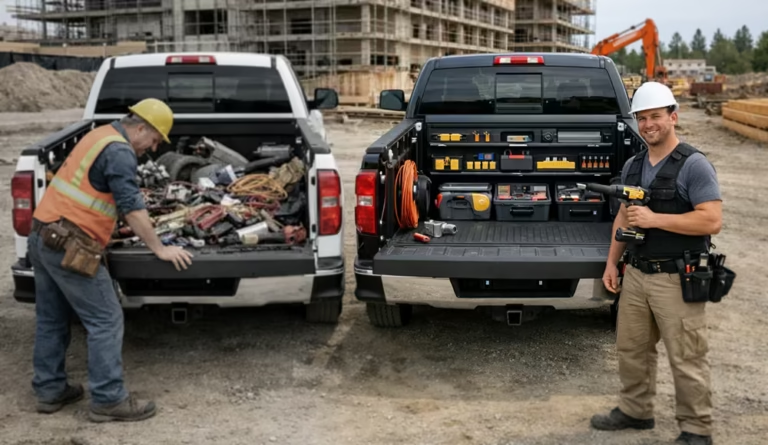
Tool tracking mistakes usually do not come from one dramatic failure. They come from small process gaps that repeat every day: a tool moves without being checked out, a crew member borrows equipment without updating the record, a damaged item goes back into circulation or a spreadsheet stays untouched until it is already out of date.
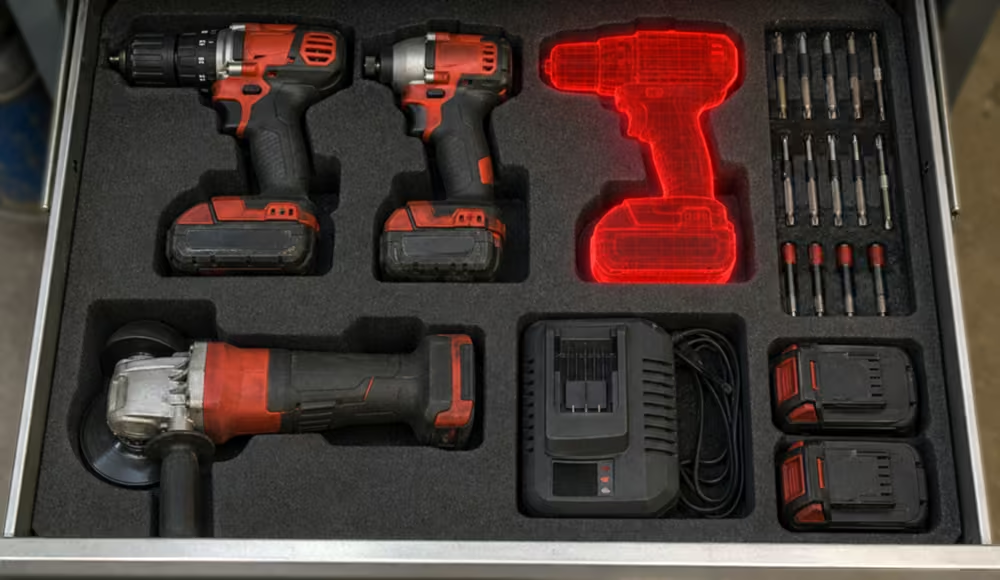
At that point, the problem is not simply that tools are hard to find. The bigger issue is that the business no longer has a reliable process for managing tool movement, ownership, condition and availability. Even companies that recognize the importance of tool tracking software can still struggle if their system is built around inconsistent habits instead of clear workflows.
Avoiding these tool management issues requires more than asking people to “do a better job” keeping records. It requires a structured process that makes tool tracking easy to follow, hard to bypass and useful enough that teams actually rely on it.
1. Treating Tool Tracking as Record-keeping Instead of a Workflow
One of the most common tool tracking mistakes is thinking of tracking as a record-keeping task. In that model, someone updates a spreadsheet, paper log or database after tools have already moved. The record exists, but it is separate from the actual work.
That creates a lag between what the system says and what is happening in the field. A tool may be assigned to one person in the record while sitting in another truck. A return may be noted later, after someone has already spent time looking for the item. Over time, the tracking system becomes less trusted because crews know it may not reflect reality.
The fix is to make tool tracking part of the workflow itself. Tool movement should be recorded at the moment it happens, whether a tool is checked out to an employee, assigned to a job, transferred between crews or returned to storage. This is where tool tracking software can play a practical role by replacing after-the-fact updates with real-time transactions that follow the tool through its normal lifecycle.
2. Failing to Define Responsibility for Each Tool Movement
A tool tracking process breaks down quickly when responsibility is vague. If anyone can take a tool, move a tool or return a tool without clear ownership, the organization may know that equipment is missing, but not why it went missing or who last had control of it.
This is especially common with shared tools, jobsite equipment and items stored in vehicles or tool cribs. The more people who have access, the easier it becomes for accountability to disappear. When a tool is damaged, unavailable or unreturned, no one has a complete record of the handoff.
A stronger process assigns responsibility at every movement point. That does not mean blaming employees for every issue. It means creating a reliable chain of custody. The system should show who checked out the tool, where it was assigned, when it was expected back and whether it was returned in usable condition. Without that level of detail, tool tracking becomes a loose inventory list rather than an accountability system.
3. Allowing Exceptions Outside the Check-In and Check-Out Process
Even well-designed processes fail when exceptions become normal. Someone is in a hurry, so they grab a tool without checking it out. A supervisor approves a quick transfer between crews but does not record it. A tool comes back after hours, so it gets placed on a shelf with no return update.
Each exception may seem harmless in the moment. The problem is cumulative. Once teams learn that the process is optional, the data becomes incomplete. Eventually, the company is making decisions based on a system that only captures part of the truth.
The fix is not to create a rigid process that ignores field realities. It is to design exception handling into the workflow. If tools are transferred between employees, the system should make that transfer easy to record. If returns happen after hours, there should be a quick method for logging them. If emergency use is common, the process should account for it without allowing tool movement to disappear from the record.
4. Using Inconsistent Tool Names, Categories and IDs
Bad data structure is one of the less obvious tool tracking mistakes, but it can quietly undermine the entire process. If one location calls an item a “hammer drill,” another calls it a “rotary hammer” and another uses only a model number, reporting becomes messy. If tools do not have consistent IDs, employees may check out the wrong item or create duplicate records.
This becomes more problematic as the organization grows. A small team may be able to work around naming inconsistencies through memory and familiarity. A larger operation cannot. Multiple jobsites, crews, warehouses and service vehicles need a shared language for the same types of tools.
The fix is to standardize tool records before the tracking process becomes too fragmented. Each tool should have a unique identifier, a consistent naming convention, a category and the relevant details needed for search and reporting. That may include model, serial number, location, etc. Clean data makes the system easier to use and makes reports more reliable.
5. Collecting Tool Data Without Reviewing It
Another common mistake is collecting tracking data but not using it. A company may have records of checkouts, returns, usage history and missing tools, but if no one reviews that information, the data does little to improve the operation.
This limits the value of the tracking system. Usage data can reveal tools that are frequently unavailable, underused, repeatedly damaged or assigned to the wrong locations. Return patterns can show where accountability is breaking down. Usage records can also help identify which equipment should actually be serviced, retired or replaced (and which equipment should not).
The fix is to build review habits into the management process. Supervisors and operations leaders should periodically look at tool availability, overdue items, damage reports, utilization and replacement trends. The goal is not reporting for its own sake. The goal is to use tool data to make better decisions about purchasing, allocation, maintenance and accountability. Tool tracking software should simplify this process by providing a dashboard that readily surfaces relevant information.
6. Making the Process Too Complicated to Follow
A tool tracking process can also fail because it asks too much of the people expected to use it. If employees have to fill out long forms, enter repetitive details or wait until they return to the office to update records, tracking becomes a burden. The more friction the process creates, the more likely people are to skip steps.
This is especially important for field service, construction and manufacturing environments, where tool movement happens during active work. A process that looks reasonable in an office may not hold up in a truck, on a jobsite or on a busy shop floor.
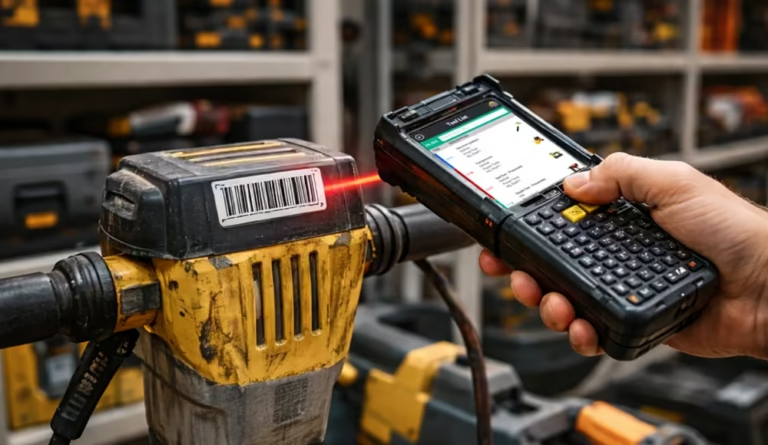
A reliable process should capture the necessary information with as little friction as possible. Barcode scanning, mobile access, predefined fields and simple check-in/check-out workflows can make a major difference. The most effective tool tracking software supports these steps without making field teams feel like they are doing extra administrative work. The easier the process is to follow, the more complete and trustworthy the data becomes.
How to Build a More Reliable Tool Tracking Process
The best way to avoid tool tracking mistakes is to treat the process as an operational control system. It should define how tools move, who is responsible for them, and how exceptions are handled. It should also produce data that managers can use to improve availability, reduce waste and make better purchasing decisions.
That does not mean every organization needs the same workflow. A contractor managing tools across jobsites will have different needs than a manufacturer managing equipment inside a facility. A field service company may need stronger mobile access, while a warehouse-heavy operation may care more about tool cribs, audits and controlled checkout points (kiosks).
What matters is that the process is consistent, visible and easy to use. A strong tool tracking system should support the way work actually happens while still enforcing enough structure to prevent tools from disappearing into informal handoffs and incomplete records.
Final Thoughts
Tool tracking mistakes are not just administrative problems. They affect productivity, accountability, cost control and the reliability of day-to-day operations. When tools move without a clear process, companies lose more than equipment. They lose time, trust in their records and the ability to make informed decisions.
The solution is not simply to track more information. It is to create a better process for capturing the right information at the right moment. When tool tracking software is paired with clear workflows, consistent data, defined accountability and field-friendly processes, companies can turn tool tracking from a reactive chore into a reliable part of operations.