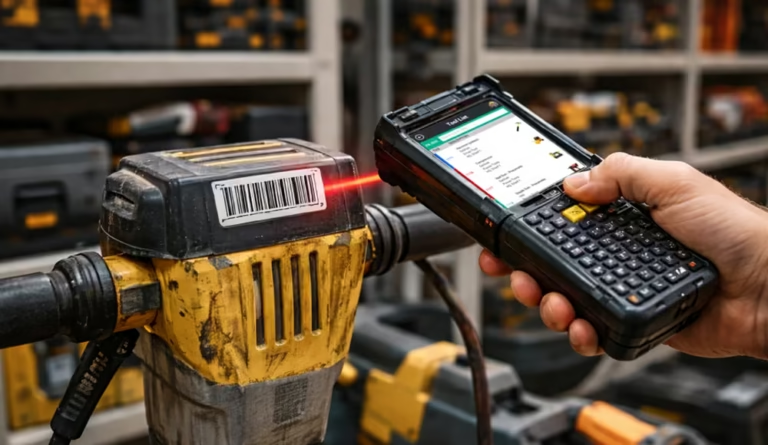
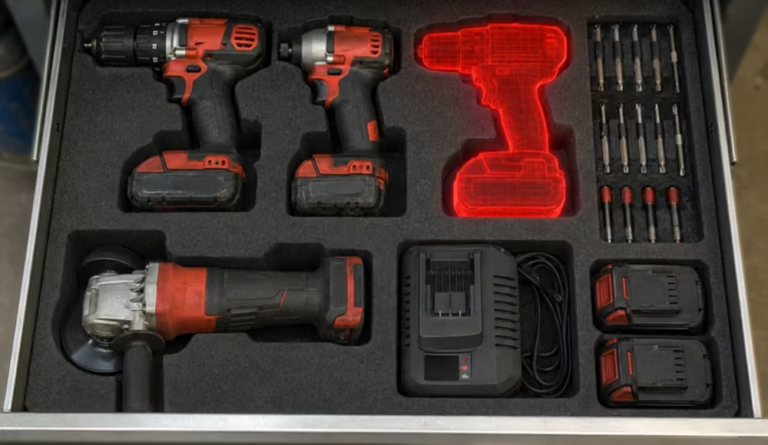
Tool tracking software is a digital system used to monitor the location, usage, condition, and ownership of tools and equipment. that monitors the location, usage, condition, and ownership of tools and equipment. It replaces manual methods (like spreadsheets, paper logs, and informal check-out processes) with a centralized system that provides real-time visibility and accountability.
While the concept is not new, its role has changed. In 2026, tool tracking software is no longer just a convenience or administrative aid. For many organizations, it is a core operational system that directly affects cost control, workforce productivity, and overall efficiency.
What Tool Tracking Software Actually Does
At a practical level, tool tracking software brings structure to a process that is often fragmented and informal. It creates a consistent way to assign tools, track movement, and record how tools are used over time.
When a tool is checked out, the action is recorded. When it is returned, transferred, inspected, or serviced, those events are recorded as well. Over time, this builds a complete lifecycle history for each tool. Teams can quickly see where a tool is, who last used it, and whether it is available or needs maintenance.
Most systems support barcode or RFID scanning, mobile access, and real-time updates. The result is better recordkeeping with immediate visibility. Teams no longer rely on delayed updates or manual reconciliation. Instead, they can access accurate information when they need it.
Why Traditional Tool Tracking Methods Break Down
Many organizations still rely on spreadsheets, paper forms, or loosely enforced processes. These methods remain common because they are familiar. However, they are not effective.
The impact is not limited to tracking. Teams spend time searching for missing tools. Companies buy duplicates because they assume tools are unavailable. It becomes difficult to determine who is responsible for a tool at any given time. What starts as a tracking issue quickly affects scheduling, productivity, and cost control.

Manual systems cannot keep up with how tools move through an organization. Tools are shared, transferred, and moved between job sites, vehicles, and employees. By the time information is recorded, it is often outdated. In some cases, it is never recorded at all. Over time, these gaps add up and reduce visibility.
Why Tool Tracking Software Matters in 2026
Several changes in how organizations operate have made tool tracking far more important. What were once minor inefficiencies are now larger operational problems as teams grow, spread out, and rely more on digital systems.
Distributed and Mobile Workforces
Teams are no longer centralized. Work now happens across job sites, regions, and environments. Tools move constantly between locations, vehicles, and employees. In many cases, there is no consistent handoff process.
This creates gaps in visibility. Without a system designed for this level of movement, teams rely on assumptions instead of facts. As a result, time is lost searching for tools. Work is delayed when tools cannot be found. Uncertainty increases across operations. Tool tracking software solves this by maintaining a continuously updated record of tool movement. Everyone works from the same information, even across distributed teams.
Rising Equipment Costs
Tools and equipment are a significant investment. In many industries, they represent a growing portion of operational costs. As prices increase, inefficiency becomes more expensive.
The problem is often not a lack of tools, but a lack of visibility. Without accurate tracking, it is hard to tell whether tools are unavailable or simply misplaced. This leads to unnecessary purchases and poor utilization. A structured tracking system makes usage clear. Organizations can see how tools are used, reduce duplicate purchases, and extend equipment life through better oversight.
Increased Accountability Expectations
Organizations need to maintain clear records of how tools are used. This applies to internal controls, safety requirements, and audits. Manual systems struggle to meet this standard.
When records are incomplete, responsibility becomes unclear. If a tool is lost or damaged, it is difficult to identify what happened. This creates risk and uncertainty. Tool tracking software creates a clear record of each interaction. It shows who had a tool and when. This improves accountability and supports compliance without relying on reconstruction after the fact.
Better Decision Making Using Real-Time Data
Operations depend on accurate information. Teams need to know what tools are available before scheduling work or assigning crews. When information is outdated, decisions become less reliable.
Without real-time visibility, teams react to problems instead of planning ahead. They may over-allocate tools, delay work, or make decisions that reduce efficiency. With accurate data, decisions become more informed. Teams can plan with confidence, coordinate more effectively, and avoid unnecessary delays.
Shift Toward Digital Operations
Organizations are replacing manual processes with digital systems. This shift applies not only to administrative work, but also to field operations and asset management.
When most processes are digital but tool tracking remains manual, a gap appears. Information becomes fractured, and the benefits of digital systems are reduced. Tool tracking software closes this gap. It allows tool data to be captured, accessed, and analyzed alongside other operational data, creating a more unified system
Turn Insight Into Cost Savings
Tool tracking software does more than show where tools are. It changes how they are managed. With consistent data, patterns become visible. Teams can identify tools that are underused, overused, or causing delays. Maintenance can be scheduled based on actual usage. This reduces downtime and avoids unnecessary servicing.
Clear records also reduce loss. Tools are less likely to be misplaced when their movement is tracked. Teams spend less time searching and more time working. Over time, organizations shift from reacting to problems to managing operations proactively. Decisions are based on real data, not assumptions.
Where Tool Tracking Software Is Most Relevant
Tool tracking software is especially useful for organizations that manage tools across multiple employees or locations. This includes construction, field service, manufacturing, facilities management, oil and gas, public works, and telecommunications.
However, the challenge is not limited to specific industries. Any organization that manages a large number of tools faces the same issue: maintaining accurate and current information. As operations evolve, manual methods become harder to manage and less reliable.
6 Things to Look for in a Tool Tracking Solution
Choosing the right tool tracking system means ensuring it will work under real-world conditions. Many platforms appear similar at first, but differences become clear during daily use. When evaluating tool tracking software, consider the following:
- Ease of Use: If checking tools in and out is cumbersome, it will not be done consistently. An effective system depends on simplicity and ease of use.
- Accountability: A tool tracking solution should not only show where a tool is, but how it has been used. A clear, time-stamped history improves accountability and reduces tool loss.
- Reliability: Users may not have constant connectivity so systems that depend on connectivity can fail. An effective solution should work even without connectivity and sync data later.
- Adaptability: Tool tracking processes change over time. The system should be customizable to adapt as your operations evolve and grow.
- Integration: Tool tracking data should not be isolated. Tool tracking software provides more value when it connects to other backend systems as part of a cohesive infrastructure.
- Insight & Analysis: tool data should be actionable. The tool tracking system should help identify usage patterns, inefficiencies, and opportunities for improvement. This empowers better decision making.
A Foundational System, Not Just a Utility
Tool tracking software is often introduced to solve a specific problem, such as lost tools or inconsistent records. In practice, its impact goes much further.
With reliable tracking, organizations gain a clearer view of how tools are used. This leads to better decisions, lower costs, and more structured operations. In 2026, these outcomes are no longer optional. They are expected. For organizations that rely on tools, a modern tool tracking system is a necessary foundation.