Tools are one of the most heavily used and least controlled assets in many field-driven organizations. Construction crews, service technicians, and maintenance teams rely on them daily, yet many companies still operate without a formal tool tracking system. Tools are often managed through informal processes, spreadsheets, or paper-based methods that provide little real visibility.
The result is not just occasional loss. It is a steady accumulation of hidden costs that affect productivity, project timelines, and overall profitability. Understanding the true cost of lost and untracked tools requires looking beyond replacement expenses. These costs show up across operations in ways that are often overlooked until they begin to impact performance at scale.
Direct Replacement Costs Are Only the Starting Point
The most visible cost of tool loss is the need to replace missing equipment. When a drill, meter, or specialized device goes missing in an environment without a tool tracking system, it is typically reordered without much investigation. Over time, these small purchases add up.
For companies with multiple crews, even a modest rate of loss can result in tens or hundreds of thousands of dollars in annual replacement spending. High-value tools, such as diagnostic equipment or calibrated instruments, amplify this effect.
Without tool tracking software to provide accountability and visibility, organizations often lack the data needed to understand where loss is occurring or how frequently tools are being replaced. This makes it difficult to control spending or identify patterns that could be corrected.
Time Spent Searching = Wasted Labor Costs
One of the most persistent inefficiencies in environments without tool tracking software is time spent looking for tools. This is rarely tracked or measured, but it is a consistent drain on productivity.
Field employees often develop informal workarounds, such as calling other crews, checking multiple storage locations, or retracing steps from previous jobs. Without a centralized tool tracking system, there is no reliable way to confirm where a tool is or who has it.

Each instance may only take a few minutes, but across an entire workforce, this becomes a significant labor cost. If a technician spends even 15 minutes per day locating tools, that translates into over an hour per week of lost productive time. Their supervisors or coworkers might also start searching, compounding the labor hours wasted looking for tools. Multiplied across dozens or hundreds of employees, the cost becomes substantial.
Downtime and Delayed Work Carry a High Price
In addition to the labor hours wasted looking for tools, there are larger downstream impacts. When a required tool cannot be located quickly, work slows or stops entirely. In organizations without a digital tool tracking system, this lack of visibility directly leads to downtime.
This disruption has a cascading effect. A single missing tool can delay task completion, which then pushes back dependent work. On larger projects, these delays can compound across crews and schedules.
For example, if a crew loses access to a specialized testing device, they may need to reschedule inspections or wait for another team to finish using theirs. The cost of idle labor and delayed milestones can quickly exceed the cost of the tool itself.
Excess Inventory Driven by Poor Tool Tracking
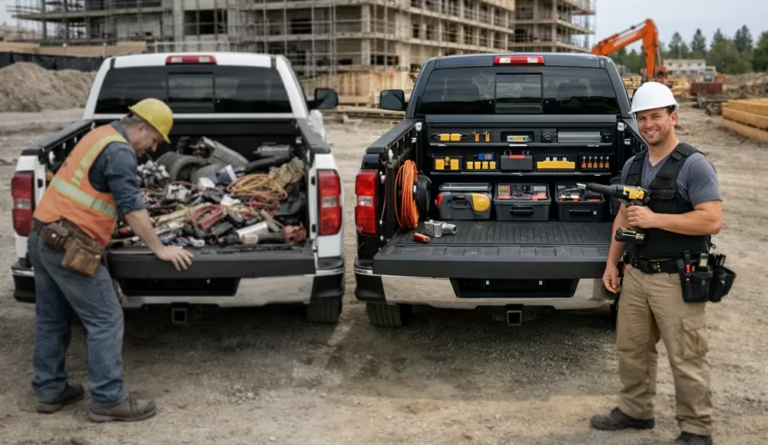
In many organizations, tool loss leads to over-purchasing. Without a reliable tool tracking system, companies often buy additional tools to ensure availability rather than addressing the root cause. This creates a buffer that reduces immediate friction, but it also increases costs and ties up capital.
Extra tools are often distributed across vehicles, job sites, or storage areas without clear ownership, making them even harder to track over time. The organization ends up carrying more tools than necessary while still experiencing shortages when they matter most. This combination of excess inventory and inconsistent availability is a direct result of operating without an effective tool tracking system.
Lack of Accountability Leads to Recurring Loss
When tools are not assigned to specific individuals or tracked with a reliable system, accountability becomes unclear. In environments without tool tracking software, it is difficult to determine where a tool was last used or who was responsible for it.
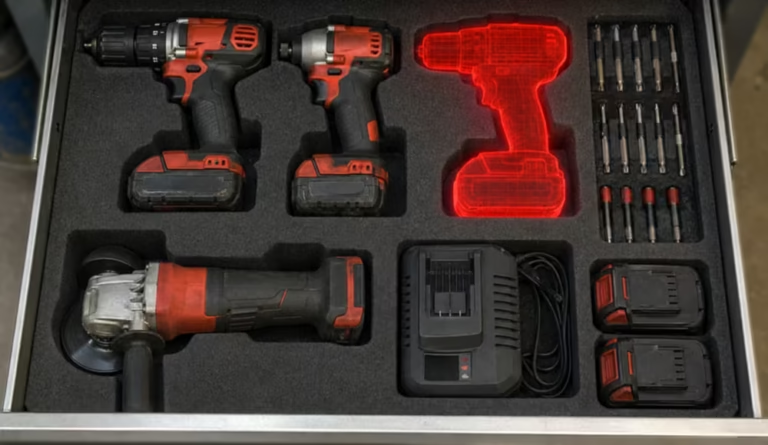
This lack of visibility tends to normalize loss. Employees may not intentionally misuse tools, but without clear ownership, there is little incentive to ensure they are returned or properly stored. Over time, this creates a cycle where missing tools are accepted as part of normal operations. A centralized tool tracking system introduces accountability by tying tools to users, locations, and usage history.
Maintenance and Calibration Gaps Increase Risk
For tools that require regular maintenance or calibration, poor tool tracking introduces both operational risk and unnecessary expense. Without reliable visibility into where tools are and how often they are used, organizations are forced to manage maintenance based on assumptions rather than actual usage. This creates two distinct problems:
- Tools may be used beyond their recommended service intervals because there is no clear record of when they were last used or serviced. This can affect performance and accuracy, leading to rework, failed inspections, or quality issues that are far more costly than the maintenance itself. Missed maintenance can also reduce the effective lifespan of tools and equipment.
- Maintenance and calibration may be performed unnecessarily. When usage is not tracked, companies frequently default to time-based schedules for all tools, regardless of whether they have actually been used. A calibrated instrument that has been sitting unused in storage may still be sent out for costly recalibration simply because the date threshold was reached. For high-value or specialized equipment, this results in recurring costs that provide no operational benefit. Over time, unnecessary servicing can represent a meaningful portion of total tool-related spend.
A structured tool tracking system helps address both issues by linking maintenance schedules to actual usage and location. This ensures that tools are serviced when needed, not simply when a date is reached, while also maintaining accurate records for performance and compliance
The Compounding Cost of Untracked Tools
Each of these costs may seem manageable in isolation. A few missing tools, occasional delays, or minor inefficiencies may not trigger immediate concern. The issue is how these factors compound over time. Lost tools lead to replacement purchases. Searching for tools is both wasteful and reduces productive time. Lack of visibility causes delays. Excess inventory increases overhead. Weak accountability perpetuates the cycle.
Together, these effects create a persistent drag on operational efficiency that is difficult to quantify without a structured approach.
How Tool Tracking Software Changes the Equation
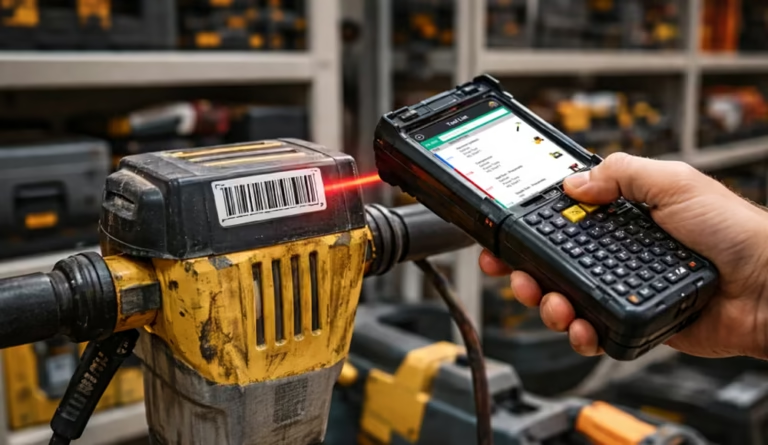
The underlying issue in most of these scenarios is a lack of visibility. Tool tracking software addresses this by creating a centralized system for managing tools throughout their lifecycle. Tools can be assigned to individuals, checked in and out, and easily located in real time. Usage history and audit trails provide context for where tools have been and how they are being used.
For example, a technician can confirm tool availability before arriving on site. Supervisors can see which tools are assigned to each crew and identify gaps before they impact work. Maintenance schedules can be tied directly to actual usage.
Organizations that implement a modern tool tracking software solution are able to reduce loss, minimize downtime, and improve accountability across their operations.
Making the Cost Quantifiable
Many organizations underestimate the cost of lost and untracked tools because the impact is distributed across different areas of the business. Replacement purchases appear in procurement budgets, lost time shows up as reduced productivity, and delays affect project timelines.
Bringing these elements together reveals the full picture. The cost is not just what is spent on replacing tools. It is the cumulative effect of inefficiencies that touch nearly every part of operations.
Once these costs are made visible, the need for a proper tool tracking system becomes much clearer. By addressing the root causes of loss and inefficiency, tool tracking software quickly delivers high ROI.